Showing posts with label poultry. Show all posts

Sunday, March 21, 2010

Compost & Other Such Things

Yesterday we were cleaning out the animals, when it became clear the compost heap needed to be emptied a bit. There followed a fair bit of digging and removing half of the compost in readyness to put it on the raised beds next weekend. Last year we had a bit of a problem because the heap was smelly, a sure sign that we were getting the mixture a bit wrong. However I was reallly happy to find that now it has rotted down to the most beautiful loamy mixture and doesn't smell at all. It's beautiful, and absolutely crawling with life! Hopefully the grass snake will be back this year...

Recipe for excellent compost
copious quantities of each of the following:
- vegetable peelings etc
- paper, cardboard, and straw/wood shavings from cleaning out the animals
- animal droppings
- dead leaves
- worms, woodlice, etc, who should come of their own accord

allow to mix and stew. Serve on raised beds, dug in or as a mulch, and therein plant vegetables, fruits, flowers... Delicious!


The animals very much enjoyed the ordered chaos of rearranging the compost...particularly the ducks, who were slurping up every worm they could get their hands on.


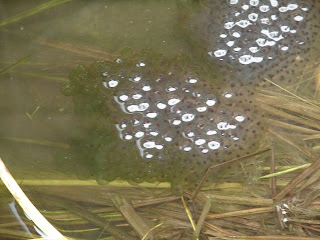
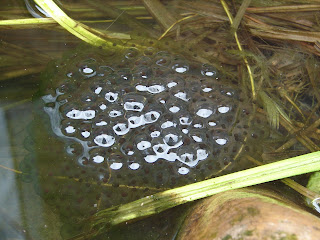
And the good news is that despite a couple of days of wet weather spring is definitely here! The daffodils are finally out, having been late for St. David's Day :( ...there are nearly always bees in the park near my college collecting stunningly bright orange crocus pollen... and best of all, this week saw the first clumps of frog spawn!


Tuesday, July 21, 2009

2 Grey Weeks Later...

We've had about a fortnight of rotten weather. I'm just hoping it clears up by the weekend so that I can practice taking a sample of adult bees in a match box in preparation for my Basic exam on Monday 27th!

Luckily I have now learned how to get the smoker going: DON'T USE THE RIDICULOUS HESSIAN SACKING WE WERE USING BEFOREHAND. I have never been able to light the smoker so I was doing some practice the other day. I used our spare smoker in case the main one was broken, and it had a roll of cardboard in there already, so I used that and I lit it FIRST TIME. So fuel choice is important, and thankfully I'm not completely incompetent! :-)

There have been bees out and about but it's mostly bumbles - most of the time it's been only just warm enough for honeybees to venture out, and way too wet. However, we did get some beekeeping done at the weekend, and it was fantastic!

We only inspected 2 apiaries out of our 3. In the first one we have 2 hives and 2 nucs. Everyone is getting on amazingly well over there. The nucs need to go into full sized hives ASAP - they're building up so quickly, despite the weather. We also harvested our FIRST EVER FULL SUPER! We haven't done anything to it yet but we'll be getting our extractor cleaned up etc. soon.

In the 2nd apiary we have the hive that we collected from that barn wall (see the video blog, http://alittleisland-tv.blogspot.com/) and they're doing OK. We thought that they might have EFB, but have seen no signs of that on second inspection. However, they're now quarantined and we'll call the inspector in the moment we see signs. In the mean time I may buy in a tester kit just in case. We now also have separate hive tools for each apiary, and a new record-keeping system, all of which should help us to avoid diseases like that from now on.

The new record keeping system is one that I devised myself. It's basically record sheets where you tick the boxes, e.g. queen seen, tick. Eggs seen, tick. etc. etc. You can buy record cards from beekeeping shops but making your own has several advantages: a) you can design your own layout, e.g. I like to have room to jot down notes and draw apiary layouts as well as tick boxes, b) you can just print out more as and when you need them and c) you don't have to pay for them! I might put mine on the net available for download, not sure yet, but I'll let you know if I do :-)

Chicken news: just over a week ago we unwrapped Cleo's bandaged leg and found that her infection had got much worse. It smelled bad, and it looked worse. There was no way she could have survived an infection like that, so we put her out of her misery. We disposed of her last night, and this River Cottage forum snippet should explain how: http://community.rivercottage.net/users/NJ/forums/poultry/viewtopic/topic_id:462
Since the last post we've harvested our first couple of runner beans and first handful of French beans...they were absolutely gorgeous!


My American corner has gone absolutely haywire, especially the Delicata squash (actually an Italian variety) climbing up the bronze elder bush. There are now some small sunny yellow fruits on there. And my Blue Hubbard squash is fattening up nicely, I just can't wait to eat it!


^ Delicata squash; below, the American corner


In the latest edition of Permaculture Magazine (essential reading!) there is an article about Warre beekeeping, an alternative beekeeping method that claims to be more bee friendly. I'm really interested in non-conventional beekeeping methods, such as top bar hives etc. so this was really interesting to read about. One principle behind the Warre method is leaving the hive sealed up all season...I'm really not sure about that. The theory is that bees leading a more natural life get fewer diseases, but I'm a paranoid beekeeper and like to know what's going on with my bees, so I won't be doing that just yet! However I was interested to read how they add more boxes to the bottom of the hive instead of the top, something to do with airflow and maintaining the temperature...now that we're converting to OSBs (One Size Boxes, aka Rose hives - another alternative beekeeping method where supers and brood box are all the same size - just such a common sense idea!) this is something that we could experiment with too. If you're interested in finding out more about these beekeeping methods I've put some links at the bottom of the post.

Did I tell you that I've got a job at a bamboo nursery? It's only part time but it's really good fun! Boss is nice, pay is terrible but we do get some perks. In fact to date we've had 7 perks at the least...FREE PLANTS! The nursery doesn't just do bamboo, it's also other exotic stuff, but now the boss has a website so he's branching out into other stuff too. The things is though that if a bamboo etc. isn't big enough to be saleable after he's had it a while then he just THROWS IT AWAY. Perfectly healthy plants, just too small! I think he should have a discount section on the website and sell them to other silly sentimental people who don't like to think of sweet little plants being confined to the scrap heap, but in the mean time it means that fairly often we rescue poor little plants (and not always little at that) and get to put them in our own garden! So we now have a garden full of hardy palms, bamboos, bottlebrush bushes and a North American trumpet vine. None of them have been planted out yet but have been given a little TLC. Today we were moving citruses too, and they were in flower and they smellt just so WONDERFUL, so I'm secretly hoping that he neglects them so I can take a few home ;-)


^ Bottlebrush flowers


^ Campsis radicans, American Trumpet Vine flowers

This is an exciting week for our family. It's my Grandma's birthday on Thursday, my Dad's birthday on Friday, and my auntie should be giving birth around the same time! I'm really excited and hoping to have lots of delicious home produce for my Dad's birthday meal...I dunno what yet but I'm sure I'll be able to dig up something!

Anyway, I leave you with the promised links:

http://warre.biobees.com/ Warre beekeeping


http://www.worldgardenplants.com/ and here's the nursery's website.

Wednesday, July 8, 2009

Poultry Problems and Tortoise Trouble

A brief blog about animal care and the problems we've had so far this year!


We keep a range of animals, mostly for fun. If they make eggs or honey that's a bonus! Our menagerie consists of 3 chickens, 2 ducks, 1 budgie, 2 rabbits, 1 tortoise, assorted fish, wildlife and of course our bees. Most of our animals are free to wander around our garden which I think makes for a very happy life.

Earlier this year though our tortoise, whose name is Alfie, was losing weight and being very inactive. He'd stay burried in his sleeping box all day and wouldn't eat at all, even when offered his favourite, dandylions, and treats that he wouldn't normally have, such as strawberries. We took him to the vet who told us to keep him warm and give him plenty of baths in nice warm water, but this didn't seem to make any difference. We trimmed his beak (it overgrows) to make sure that he actually was able to eat, and fussed over him daily, to no avail. It looked like he was going to die.
However, for a few months now, Alfie has perked up. The reason is, I believe, simple: tortoises just aren't designed to weather our cold climate here in the UK. The weather just wasn't warm enough to induce him to move around or eat, and his heat lamp could only do so much. My advice, if you find yourself in a similar situation, is to take your tortoise to the vet, and if nothing seems to be the problem, give him baths at least twice a day in hand hot water, leave food out for him just in case, and just give him all the love and care you can. Hibernate him well in the winter as this keeps his body clock ticking over, and keep an eye on his weight just in case. But apart from that, just make sure he rebuilds his strength over the summer and keep him otherwise healthy. Alfie perked up as soon as the sun started shining. He now eats every day and is often allowed out in the garden where he chases the chickens.
Now then, this week I spotted something really concerning. One of our ducks seemed to have broken a toe. She was sitting very still and determined to keep her foot off the floor, but when the chickens came a bullied her and she had to move off, she was limping really badly. Pops and I examined her closer and it seemed that one of her toes had broken - it was bent out of shape. The picture doesn't really show it, but it was pretty clearly snapped.
We had no idea how she'd done it or what to do, so Mum emailed the breeder, Nicki Janaway from the Warrawee Duck Farm, for advice. Nicki said that as long as she was eating, drinking and preening we shouldn't worry and should just leave her. Sure enough, within a day, she was on the mend, and limping much less. I think just the act of walking clicked the bone back into place. So, if your duck has a similar problem, just make sure she's taking care of herself, keep an eye on her, but don't worry too much.

And finally a problem with one of our chickens (yes, we named them. The chook in question is Cleopatra). Cleo, unlike her sisters, has two stumps on her legs which we assume are the remains of the spurs that I guess her ancestors had. For a while now she's had a lump on her leg. We think she may have damaged her spur stump and it may have got infected. At any rate, it looks as if it went haywire when it tried to heal herself as she now has a large lump on her leg. It doesn't seem to affect her very much - she's still top of the pecking order and bullies the other two a fair bit! But obviously we are concerned that it may get worse and seriously damage her health and happiness, so we've been trying to make her better.

I expect that other people (with more sense and money, I expect) would have killed her or got the vet to chop it off but unfortunately we can't bring ourselves to do the former and we can't afford to do the latter. We've been treated her leg therefore with surgical spirit and antiseptics. They seem to do the trick . We treat her every day and the lump began to crack off and the skin began to start healing not long ago. Thankfully because we've been doing it every day for a while she seems to get quite comfy and stays absolutely calm throughout her treatment.

Last night however we went outside to treat her and discovered that she was pouring blood. The lump must have ruptured, got snagged on something or just cracked off a bit more. Anyway, we bandaged it up (and no, we didn't pull the lump off. It was pretty loose and she was healing in some places, but I think we would have just made it worse doing that). We managed to stem the flow it seemed, and she still seemed completely unflustered! However we were worried that her health might have declined and that she might be dead by morning.

I'm pleased to report that Cleo seems fine so far. She's been limping a bit today - whether that's because of the lump or having a huge bandage round her leg I don't know, but she's still been bullying the other two and seemed well enough to try and eat my courgette plants! We're not out of the woods yet, but our plan is to keep the bandage on for a few days to give her time to heal. Eventually the lump will break off and the skin will heal. We'll keep treating to make sure the infection doesn't come back. So she seems to be doing OK, so far, I'll post again to let you know how she progresses.

Friday, March 6, 2009

Tomato Varieties and Ramblings

After growing 2 rather flavourless varieties of tomato last year (Marmande* and Moneymaker) this year I am going for full-on flavourful fruit. I have chosen 3 varieties - Sungold, which I see recommended everywhere; Alicante, which my Grandpa likes very much; and Brandywine, a heritage variety that apparently puts flavour before profit.
(*The French are very keen on Marmande, but I found it to be a bit watery for my taste! I think I remember Nigel Slater recommending it, which is usually to be taken seriously, although having read one of his books recently and seen that he thinks Bagna Cauda** is nice to eat, I have gone off him rather.)
(**Italian. Anchovies boiled down to slop. You are supposed to stick crudites in it. The black sheep of an otherwise heavenly cuisine in my view. To be avoided!)
Anyway, where was I..?
I have started them off pretty early this year - mid February - so that they have a long growing season with plenty of time to ripen.

I had 4 plants germinate from the six (two of each variety) that I planted:
2 x Sungold
1 x Alicante
1 x Brandywine

The plants that did germinate unfortunately got a bit distracted by the tortoise's UV lamp and so grew a bit long and leggy. Today when I potted them on I notcied that none of them had a decent root system (although Brandywine was the strongest). When this happens all you need to do is bury them quite high up the stem - this will encourage them to bulk up a bit and produce more rootlets.
Despite the problems with the roots however, I am very pleased with the leaves they have produced - I just need to get the balance right next time!

From now on I will be leaving them in the conservatory for the day before bringing them in the house at night to harden them off.

I replaced the seeds thta did not germinate so hopefully we'll get a couple more plants that will fruit slightly later. I also planted 3 okra seeds today. The variety I'm using is called Cajun Delight F1 from Johnson's (I usually prefer Suttons or T&M but Johnson's seem to be the only ones who do okra!). This variety is supposedly able to grow in cooler climates, even outdoors. To get them off to a good start I have placed them underneath some "cloches" (aka clear plastic bags borrowed from the supermarket) and put them on the heat pad we occasionally use for brewing. We'll see how they go!


Changing the subject, one of our chickens has started laying again, which makes a nice change from duck eggs! However, last weekend I noticed two of them fighting each other in the garden. They were really going for each other, like fighting cocks, pecking at each other's eyes, flapping their wings, flailing their legs about. We all ran outside to break it up and found one of them acting very peculiarly. She seemed to be wandering around looking poorly and lost and on every breath she made a little wheezing cry. We'd never heard anything like this before, although she had been making the noise a little earlier on in the day. We thought she may have been injured in the fight, but her face was fine - no blood, scratches or anything. I checked her vent which was fine, her feet, looked down her throat...she seemed perfectly fine apart from the fact that she looked weak and kept making that little wheezing noise. We let her down and she went to hide in a corner. She wouldn't take water but she ate as if she starved. We didn't know what was going on - I had horrible thoughts of "bird flu" and "old age" but thankfully she then went to the toilet - it was green and pretty runny, and this solved the problem - she had worms! So, a dose of an organic wormer in their water and it all cleared up!


And better yet, the particular wormer we use means that you don't have to throw the eggs away - it's perfectly safe to use them.

Finally, I'm going to babble on and on about textiles. I had another spinning lesson on Wednesday with my lovely teacher Carol Keats (http://www.easisites.co.uk/page.html?SiteID=webbsgreenfarmwool&View=2) where I learned how to spin silk and exotic fibres.


Let's start with silk. Silk is of course produced by silk worms - it comes from the cocoons that the caterpillars weave themselves when it's time for them to pupate. There are many varieties of silk worm, but they can be easily divided into domesticated ones - which are utterly dependent on humans, cannot fly and eat only mulberry leaves - and wild ones, which can get along fine by themselves and have a much more varied diet. Farmed silkworms produce pure white "mulberry" silk and wild silk worms make "tussah silk", which is less pure and includes tanins which turn it a more goldeny colour. (Above: tussah silk tops far right, mulberry silk tops second from the right).

To harvest the silk the cocoons are collected and steamed to kill the grubs inside - traditionally the peasants eat the grubs as they are a good source of protein. The cocoons are then placed in hot water and the almost invisible end of the silk fibres is picked up. In a group of seven it is then unravelled and from there can be spun or combed. This is pure silk.

There is some scum left over from this process, but this still contains silk so is not wasted. It is collected up and combed. The fibres are much shorter and it contains lumps of vegetable matter, but is still useful! When spun it gives wonderful texture. Apparently it is hard to spin but I don't know, I like short draw so I quite enjoyed it! (Above: silk "scum" top in the centre).

The pure silk can then be woven into fine silk cloth. The wasted silk from this process (silk waste) is not wasted either. The fibres are tangled and compacted, but can be cut up and carded into fluffy rolags. (Above: silk waste rolags, far left, and silk waste second from the left). The "recycled sari silk" that is popular now is silk waste. From there it is easy to spin!


My homework this week is to spin a pure silk yarn from this beautiful silk cap and recycled sari silk (above). As you can see I have already carded some rolags from the waste. The cap has been vegetable dyed by Carol by dipping each corner into a different dye bath.

Silk caps are made when the cocoon, rather than being unravelled, is wetted and stretched over a frame. One cap is made up of lots of different cocoons, and caps are sold in a big bundle called a bell. To spin from a silk cap, you need to separate out on layer (one individual cocoon) and tear it away from the rest of the cap. You then rearrange it back into the cap shape, before using your hands to make a hole in the middle. From there you pull hard, increasing the distance between your two hands and drafting the fibres out, until you have a roving! The fibres are nice and long in a silk cap so spinning it is easy!
http://www.youtube.com/watch?v=f1RTqAWKenM - a bloke making silk caps.


Carol also taught me about unusual fibres. This picture shows, from left to right: uncarded bleached bamboo filament; carbonised bamboo top; uncarded sya bean fibre; soya bean top; milk top (no joke!); banana rolags; seaweed fibre!

Let's start with the bamboo. It's INCREDIBLY soft, and feels really luxurious against the skin. Of course bamboo grows wild and very rapidly in China etc. and needs no fertilisers to help it grow. It can grow at an amazing rate, and is anti-bacterial. It is 100% biodegradable. So it's pretty environmentally friendly, if you conveniently forget about transportation and processing! The bamboo fibre is actually filament - the fibres are pulped and then extruded to make a filament (but I'm going to refer to them as fibres anyways or I'll get totally muddled up!). The fibres are short. It needs to be carded with superfine cards - Carol doesn't make rolags when she's carded it, she leaves it in a little sheet. It's getting mroe popular and I know of a couple of high street chains who are using it this season.

The soya bean fibre is a by-product of the tofu industry! Again I think this is a filament.

Milk fibre - I'm not kidding! I have no idea how they make this but I can tell you that it is luciously soft and smooth - really luxurious.

Bamboo is now used a poor man's silk. When you get it the fibres have a beautiful sheen, and stick together in thin ropes. When carded however it fluffs up rather like meringue does! The fibres need to be snipped before carding as they can be up to 3ft long!

And seaweed fibre...I haven't tried this out yet, but it too is very soft and smooth. It has a slight odour but not an unpleasant one. I'll let you know how it spins up!


And finally, more homework (though it never feels like "work"): I'm going to spin a yarn from this fantastic blend of fibres. Some of them Carol has dyed herself. I really love the earthy tones she's chosen. Clockwise from top left: silk top, carded banana, wool (longwool & lustre), bamboo top, nylon, silk waste, more carded banana, uncarded banana. Can't wait to get going!

Friday, May 23, 2008

The Witch Chickens Of Hampshire

Bad news: Hilda has joined Cleo gone broody again. Which means that two out of three of our hens will be producing no eggs until they come to their senses and snap out of it.

It is very annoying when they get broody. Obviously it is a natural part of being a chicken, but as we have no room for hundreds of little chicks and too many fussy neighbours for a cockerel it is rather pointless.

We actually gave Hilda some fertilised eggs to sit on once, donated by a chicken-keeping friend, but given the chance of actually fulfilling the purpose of going broody, she was an awful mother. She kept leaving them to get cold. Thus no little chicks grew inside; they just went off.

Broodies are also horribly grumpy animals. They go round attacking anything that moves (ducks, rabbits, humans, for example) if you disturb them, and if you lift them out of the nest box they make a very affronted "brrrrriiiiiiii!" noise. We have tried all sorts of methods: just leaving them to it, lifting them out of the nest box every time they go in, locking them out altogether (although this means that poor old sensible Nod can't go in and lay)...but nothing works. We're going to have to make a broody coop and do the thing properly.

Sometimes when both Cleo and Hilda are broody and Noddy needs to lay an egg, we find them all crammed into the two nestboxes. Here is a pic.


Noddy never goes broody. I feel quite sorry for her as today she keeps hanging round the ducks as if she's saying, "can I play with you today?" Poor chook.

Monday, May 19, 2008

Beekeeping and the Smallholder and Garden Show 2008

Yesterday we went to check on the bees. We'd left it long enough that the two hives without queens should have hatched out a couple of emergency queens, the queens should have gone on their mating flight, and they should have been starting to lay new bees. However, neither of them had queens. The queen larva in the new hive had died inside the cell (see pic) and the other one...well, there was no brood at all. We gave each hive another frame full of brood and eggs from our one productive hive, and so they have another chance now (this is also good becuase the productive one is the only hive of nice docile bees - if it works we will have three hives of nice docile bees!). If they still don't manage to create new queens, the ones we ordered from a local queen breeder will have arrived by then anyway. So all is not lost.


The good-tempered and productive hive has already filled one super (so heavy that I can't lift it on my own!!) and is onto its second. If the weather perks up again and stays good (touch wood), it may be a 3-super year...it would certainly make up for the problems we have been having with the other two hives!


Smallholder & Garden Festival, Royal Welsh Showground, Builth Wells, Saturday 17 May 2008


On Friday night we drove up to Wales and stayed in the shoebox, and then on Saturday we went to the Smallholder & Garden Festival at the Royal Welsh Showground.


It was such good fun. The place was absolutely heaving, and there were all small producers there selling their produce, and smallholders had brought their animals along to show, and their were demonstrations of sheep shearing, spinning, weaving, blacksmithing, etc. A really interesting day. Below are some pics.


The angora goats were the first thing we visited. Poppy loves goats and wants to get some (not in my garden!) and has even been on a goat keeping course at the local farm, where she learned to worm them, vaccinate them, trim their hooves, etc. But hadn't managed to convince me until Saturday.
The angoras seemed very good natured, and although they had obviously been pampered for the show, I was surprised to find that they were not as smelly as I have always believed goats to be. The memories of the foul-smelling neglected billy goat that used to live down by the canal evaporated. Apparently you shear angoras twice a year, which was a very persuasive factor. Just think how much mohair I would have to knit with! So angoras are in, when we finally get somewhere big enough to keep them.


Next we looked at some llamas and alpacas. I have a very soft spot for alpacas. They make my heart melt into a gooey mess. They are beautiful. And their fibre is exquisite. I finally managed to convince the more sceptical of my family ("so what do you do with them? are they for meat or do you just knit them?") that alpacas are graceful, beautiful, friendly, and that their beautiful fibre is worth the effort of keeping them. I have not told them the price of your average alpaca however. Better drop that bombshell when our plans are underway.

I am not so keen on the llamas though. Whereas alpacas are small and if you needed to you could easily overpower and restrain them, llamas are tall and their ears are frighteningly large (I don't know why their ears frighten me, but they look somehow unnatural). Also the farm used to have two, but they had to get rid of them when they nearly killed someone. So llamas are a no. But alpacas are a yes! Next was more goats. Yes more of them. The kids are very sweet but I am not won over by the Anglo-Nubians that Poppy is so fond of. Again it is the ears. They are just too big to be allowed. However, the Father Being tried some goats cheese and liked it, and liked the Boer goats. I may not manage to get away with only woolly goats. I may have to tolerate dairy and meat goats too. Oh well. The pigs were spectacular!!! They were all just lolling around in their pens fast asleep. Then when judging started we hopped over to the ring and watched two boars running at them and their owners frantically running after them, whacking them with walking sticks and blocking their way with white boards that said Natwest on them. I have never been to this sort of agricultural show. It was most interesting, and at times quite amusing too.


There was also a competition for sows. They were much calmer but seemed to need to relieve themselves more often. They were beautiful pigs of all breeds, including a mangalitza. I wonder if you can knit mangalitza hair?

Above: two Gloucester Old Spots. Below: the Mangalitza
We visited the poultry section too. There was everything from pigeons to bantams to owls there. There were loads of ducklings who, if head did not overrule heart on such occasions, I would have loved to have taken home. All of them. The lot. But common sense prevailed.
The poultry section was the only bit that disappointed me really. Although lots of the birds seemed healthy, there were also lots who looked very ill and uncared for. There were two silver laced partridge wyandotte hens for sale who had the worst case of scaly leg I've ever seen - and scaly leg is very damaging if you let it take hold, as your hens can lose toes. I am no great animal rights activist but I was totally shocked by the state of some of the birds. Chickens, ducks etc are not hard to keep. There is no excuse for letting animals suffer like that. I hope they found good homes

We also walked around shedloads of sheep, who were all so beautiful! My mother fell for some badger faced Welsh Mountain (no pic I'm afraid) although I was upset to see none of my favourite Gotland sheep there. I suppose they are not a native breed though, and so quite rightfully Llandwenogs, Welsh Mountains etc. had pride of place. We watched a shearing demonstration and it was very interesting - almost like a ballet.

After a bit more walking around, a quick visit to the remnants of the green building exhibition we went to a few months ago, a lamb burger and a Crickhowellian apple juice, we went home. The next day consisted of a visit to the art gallery in the Crickhowell info centre (I LOVE it there!) and a walk along the Usk. It is so beautiful, is Wales. The English don't know what they're missing.